Custom Trailer Brackets and Welded Supports: What a Supplier Needs to Quote
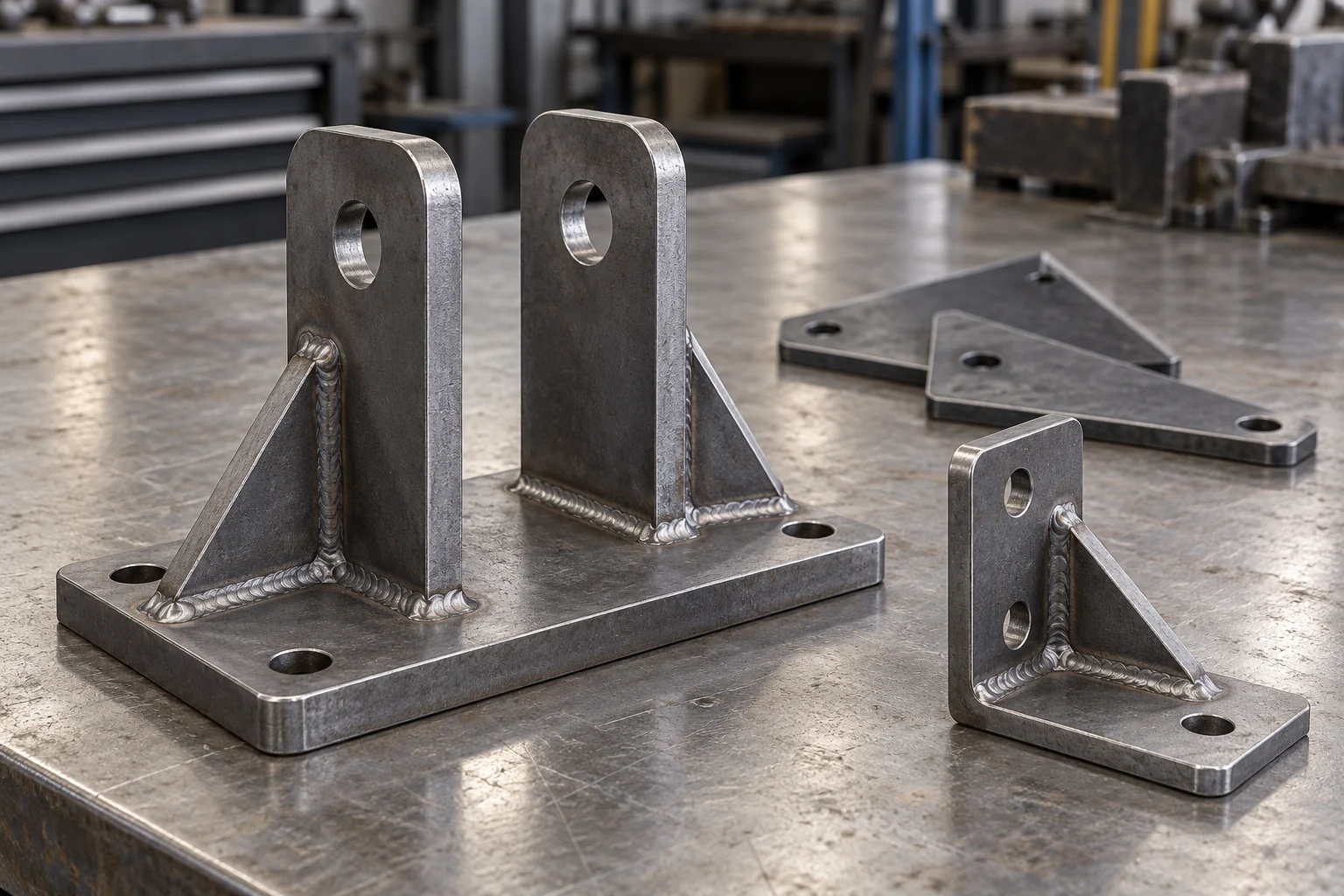
Explain what the bracket connects
A mounting bracket may be a small line item, but its hole position or mating face can determine whether the larger assembly fits. Begin the inquiry with an assembly view that shows what the bracket connects and where it sits. Include the nearby geometry needed to understand access, clearance and the intended connection.
Use a functional description such as body support bracket, mounting plate or gusseted support, then connect it to an item reference and drawing. The name alone does not define a design. THYH supplies custom metal fabrications to agreed drawings; the required loading, service conditions and design validation must be established for the customer’s actual trailer.
Separate part supply from hardware supply
A drawing of two bracket ears around a pin can be interpreted in several ways. The supplier may be asked to provide only the welded ears, the ears with finished holes, or a larger assembly including the pin and bushes. List these items in the bill of materials and state the supply responsibility for each one.
| Item or operation | Scope question | Useful RFQ detail |
|---|---|---|
| Cut and formed bracket | Loose part or welded fabrication? | Finished drawing and quantity |
| Holes and locating faces | As-cut, machined or customer-finished? | Acceptance condition and references |
| Pins, bushes and fasteners | Included, customer-supplied or excluded? | Separate item references |
| Gussets and backing plates | Included in this assembly? | Welded positions and joint details |
| Finish | Bare, protected or externally coated? | Required finish specification |
Use the same scope when comparing quotations. A lower price for unfinished holes or excluded hardware is not directly comparable with a fully specified assembly.
Define holes from the features that matter
For a bracket with paired ears, show how the holes relate to each other and to the mounting base. Include the required fit, alignment and locating references where the design needs them. Diameter alone does not define the relationship between the two holes or the position of the pin axis in the larger assembly.
Explain whether slots provide adjustment, assembly clearance or another intended function. Do not let an elongated hole substitute for an unresolved drawing issue. The supplier should be able to identify which features are critical and which dimensions are general fabrication requirements. If a mating item is customer-supplied, provide its interface drawing or agreed checking data.

Specify material and formed geometry together
List the material grade and thickness for each item. A welded support may contain a base plate, formed bracket and separate gussets with different requirements. State whether material substitution is permitted and how approval must be obtained. Similar appearance or nominal strength does not establish equivalence for the intended design.
For bent parts, show the final section, bend geometry and dimensions that establish fit. Identify the relevant inner or outer faces. If machining follows forming or welding, distinguish the machining requirement from the earlier blank geometry so the quote includes the necessary operations and inspection stage.
Review weld access and the fabrication sequence
Supply weld symbols or other unambiguous joint details, including the applicable acceptance requirements. A cosmetic view of a welded bracket does not define weld size, extent or inspection. Identify surfaces that must remain clear for a mating part or later processing.
TWI explains that welding direction and sequence can be used to manage distortion. For procurement, the useful action is to ask how the proposed fabrication route will preserve the drawing-defined interfaces. This is not a reason to prescribe a universal sequence for every bracket. The appropriate approach depends on the actual geometry and joining requirements. Read TWI’s explanation.
Ask the supplier to flag inaccessible joints or conflicting requirements before production. Agree any drawing changes through a documented approval process.
Plan finishing and inspection around the mating features
Identify holes, threads, contact faces and customer weld areas that need an agreed protection or masking condition. Specify the finish and acceptance requirements rather than relying on a photograph or a color name. Surface treatments included in THYH quotations are arranged through external suppliers; the scope is confirmed for each project.
Define the critical measurements and their condition: for example, the agreed finished bracket geometry rather than the shape while clamped in a welding fixture. Specify any assembly check separately from dimensional inspection. The RFQ should describe what is to be checked, how acceptance is determined and what records are required; it should not assume that every possible check is included by default.
Use the first approved part to control repeat orders
If an initial sample or first-article review is required, agree its deliverables and approval point before the order is released. Record the drawing revision, material, included hardware, inspection results and approved finish. A sample approval should not leave an unresolved difference between the sample and the production drawing.
For repeat orders, send the current revision and highlight changes affecting holes, welds, material, quantities or packaging. Ask for confirmation that superseded data has been replaced. Keeping the quotation package consistent makes it easier to compare repeat pricing and investigate any receiving discrepancy.
Start with the brackets and supports category and send the component plus assembly information. A clear package lets THYH review the required cut, formed, machined and welded operations and return a quotation with explicit inclusions.
Frequently Asked Questions
Can a bracket be quoted from a photograph?
A photograph can support an initial discussion, but a confirmed custom fabrication quote needs drawing-defined geometry, material, quantity and other applicable requirements.
Are pins and bushes automatically included with a welded bracket?
No. List purchased hardware separately and state whether it is supplied by the fabricator, provided by the customer or excluded from the order.
Can THYH assign a load rating from the bracket image?
No. Required loading and design validation depend on the actual application. A generic image does not establish a load rating or engineering approval.
Should machined holes be identified separately in the RFQ?
Yes. State the required finished condition, dimensions, fit and inspection stage so machining and verification are included in the quoted scope.
Related Reading & Components
Sources & Further Reading
These references support the specific technical context discussed above; they do not certify our components or replace project-specific design review.