Dump Trailer Tailgates: Hinge, Latch and Fit Checklist
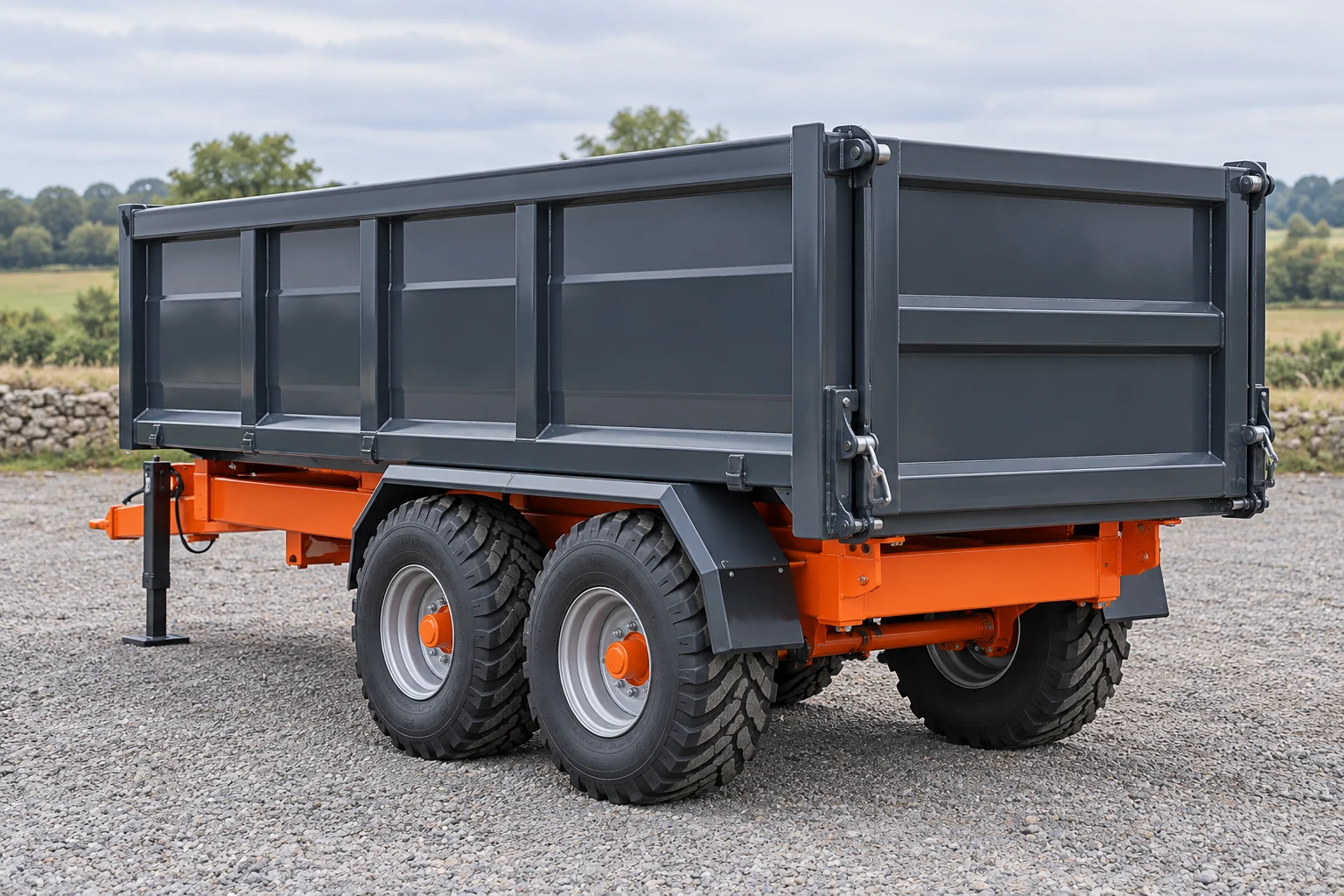
The tailgate is more than a rectangular panel
A rear gate is easy to recognize in an application photograph. It is harder to specify from that photograph. Two similar-looking gates may connect to different hinge brackets, latch arrangements, body openings or customer-supplied actuators. Their outer dimensions may be close while their mating interfaces differ.
When sourcing a dump trailer rear panel or tailgate fabrication, send the surrounding body geometry as well as the gate drawing. The supplier needs to understand what is fabricated, what is supplied as purchased hardware and what your assembly team will install later.
This checklist addresses procurement and fabrication interfaces. It does not establish a gate load capacity, a hydraulic design or a safe operating procedure. Those are separate design and validation matters.
Record the interfaces in one place
| Interface | What the drawing should identify | What to clarify in the quote |
|---|---|---|
| Body opening | Reference geometry, corner relationships and datums | Whether mating body parts are included |
| Hinges | Axis, bracket locations, bores and pin requirements | Fabricated brackets only or hardware too |
| Latches | Mounting positions and counterpart geometry | Latch supply and installation responsibility |
| Closure | Clearance, stops and any seal interfaces | Any agreed fit or functional check |
| Finish | Coated surfaces and protected fits | Inspection stage and finishing scope |
1. Reference the gate to the body opening
Begin with the opening that receives the gate. Show the relevant body rails, corners and connection faces. Identify which drawing controls the assembly if dimensions appear in more than one file. Revision control matters particularly when the body and gate are sourced as separate packages.
Then show the gate envelope and the intended relationship to the opening. Use the design’s actual clearance requirements rather than a generic gap copied from another trailer. If the supplied rear panel is only one element of a closure system, list the other elements and the party responsible for them.
For a combined order, the body component collection can be discussed as a coordinated package. That does not remove the need for an itemized bill of materials and agreed acceptance requirements.
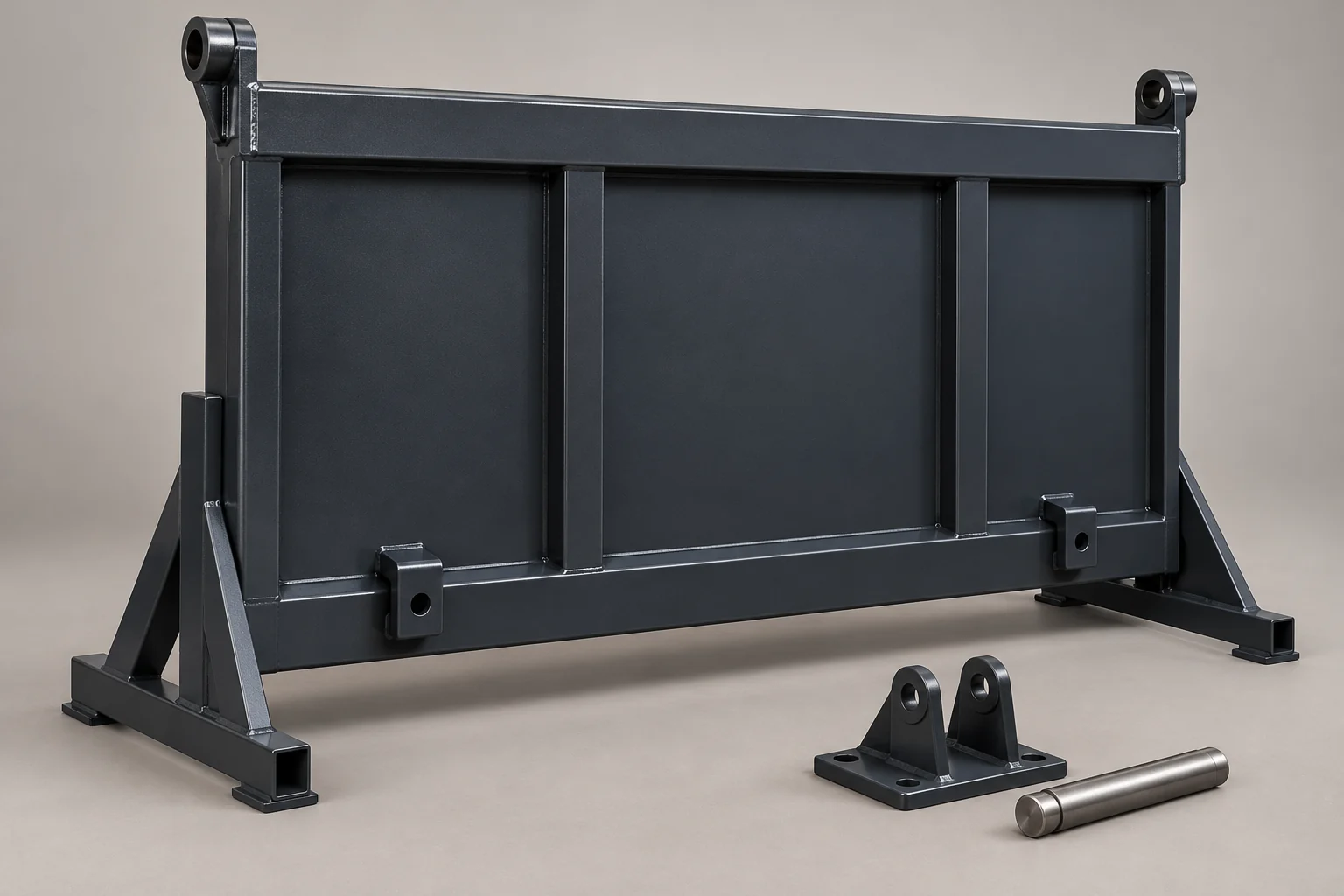
2. Identify the hinge axis and mating hardware
A hinge lug is not defined by its visible shape alone. The drawing should locate the intended axis and show how the gate-side and body-side features relate. Provide the bore, pin and mating-feature requirements that the design needs, including the applicable datums.
State whether the order includes fabricated hinge brackets, machined features, pins, bushes or an assembled hinge arrangement. A quote for welded gate lugs should not be treated as an offer for every item needed to complete the hinge.
If machining is required after welding, identify the finished feature and inspection requirement. The supplier can then review the manufacturing route against the actual component. Do not assume that a cut or as-welded opening is equivalent to a specified finished fit.
3. Show both halves of the latch interface
The latch-side requirement includes more than the tab welded to the gate. Share the counterpart geometry and mounting relationship where it affects fabrication. Identify whether the supplier provides the latch hardware, only fabricates its mounting interfaces, or leaves the whole system to the customer.
Include any stops, striker interfaces or seal-support details that belong to the order. Where an actuator is part of the customer’s design, provide the required envelope and connection information without assuming the fabricator is responsible for actuator selection or system approval.
Make the drawing and quotation agree on the supply boundary. If an item is shown for reference only, label it accordingly so it is not accidentally included in one bid and excluded from another.
4. Inspect the gate in the agreed fabricated state
Welding can alter panel geometry and the position of attached features. TWI identifies shrinkage, angular distortion and bowing among the possible forms of welding distortion. This is a reason to specify the gate’s acceptance condition and inspection references, not a reason to assume that every welded gate will have the same result. Read the TWI overview.
Define the outer dimensions, diagonals or interface locations that need to be recorded for your project. State whether requirements apply before or after finishing. If the design needs a sample fit check, define the mating parts, the method and the acceptance criteria in the order.
A dimensional report and a functional check are different deliverables. Request each explicitly where needed. Do not assume a photograph of the gate proves alignment, a finished fit or the performance of a complete closure system.
5. Account for finish and assembly responsibility
Identify surfaces that receive coating and those that need protection or masking. For pin-and-bore fits or other mating features, the specification should make clear which finished condition must be achieved. Finishing decisions should be reviewed with the component geometry rather than left until packing.
THYH Trailer Parts can discuss drawing-based cutting, forming, machining and welding for the specified fabrication. Painting, powder coating and galvanizing are arranged through external suppliers where agreed. Material, process and inspection coverage remain order-specific.
Your assembly team should know what work remains after delivery: fitting purchased hardware, assembling interfaces, completing the body or performing an agreed system validation. Record those responsibilities before the purchase order is released.
What to send with a tailgate inquiry
- The current gate drawing and the relevant rear body assembly.
- Part numbers, drawing revisions and required quantities.
- Material grade, thickness, reinforcement and weld details.
- Hinge-axis and latch-interface references.
- Included hardware, customer-supplied items and explicit exclusions.
- Finished-state dimensions, inspection records and any sample fit-check requirement.
- Surface treatment, protected features, marking and packing instructions.
A useful supplier response identifies the manufacturing scope, records open questions and separates optional work from the base offer. That makes the review more reliable than comparing a short price against a broad description such as “rear door complete.”
Frequently Asked Questions
Can the tailgate be supplied separately from the body?
Yes, it can be requested as a separate fabrication. Supply the mating body geometry and interface requirements, and confirm which hardware and checks are included.
Does a correct gate width guarantee that it will fit?
No. The intended fit also depends on the body opening, hinge and latch relationships, clearances, fabricated condition and other requirements in the approved assembly design.
Should pins, bushes and latches be listed in the bill of materials?
Yes. List them and state whether they are supplier-provided, customer-provided or reference-only. A drawing of an interface does not automatically include its purchased hardware.
Is a functional check the same as a dimensional inspection?
No. A dimensional inspection records agreed features; a functional or fit check requires its own setup and acceptance criteria. Include the required checks explicitly in the order.
Related Reading & Components
Sources & Further Reading
These references support the specific technical context discussed above; they do not certify our components or replace project-specific design review.